A bright smile can boost your confidence and change how you look. That’s why so many people turn to teeth whitening when they want a little boost. But if you have sensitive teeth, you probably wonder if whitening is safe for you. The short answer: yes, it’s possible to whiten sensitive teeth if you’re careful about how you do it. Let’s dive deep into what’s going on with sensitive teeth, how whitening works on sensitive teeth, and the best ways to get a great smile without the pain.
What causes tooth sensitivity?
Tooth sensitivity can happen for a bunch of reasons. Sometimes the enamel, the hard outer layer of your teeth, thins over time, exposing the sensitive dentin underneath. Gum recession is another major reason behind sensitive teeth. It’s when your gums pull back, the roots of your teeth get exposed, and those roots are super sensitive. Cavities or cracks in your teeth can also let hot or cold food or beverages reach the nerves inside your teeth. And brushing too hard with a stiff/hard toothbrush can just make everything worse by wearing down enamel and pushing your gums back.
If you shiver when you eat ice cream or sip hot coffee, you probably have sensitive teeth. But does that mean you’re stuck with a dull smile? Not at all.
How whitening fits into the picture
Most whitening products use peroxide to break up stains. They work, but they can also irritate the pulp (the soft tissue inside your teeth) if your teeth are already sensitive. The bleaching agents sometimes reach the dentin, where all those nerve endings live. For most people, any sensitivity after whitening goes away in a few hours or a day. Still, if you know your teeth are sensitive, it’s smart to play it safe and take some extra steps.
Tips to Whiten Sensitive Teeth
1. Pick the Right Product
Go for whitening products made for sensitive teeth. These usually have less peroxide, or they add things like potassium nitrate or fluoride to help calm sensitivity. You’ll find options at the store, or your dentist might have some recommendations.
2. Talk to Your Dentist
Before you start anything, check in with your dentist if you already deal with sensitivity. They can determine why your teeth are sensitive and recommend the safest whitening options. They might offer professional whitening treatments that are gentler than what you can buy over the counter.
3. Try Whitening Toothpaste
If you’re not ready to jump into heavy-duty whitening, try toothpaste with mild whitening power. It just scrubs away surface stains and is less likely to make your teeth hurt than stronger bleaching products.
4. Don’t Overdo It
Using whitening products too much can definitely make sensitivity worse. Stick to the directions. And don’t be afraid to take breaks between treatments to give your teeth time to recover.
5. Take Care After Whitening
Once you’ve whitened your teeth, avoid super hot or cold foods and drinks, and steer clear of anything acidic for a little while. Using a toothpaste made for sensitive teeth can also help calm things down.
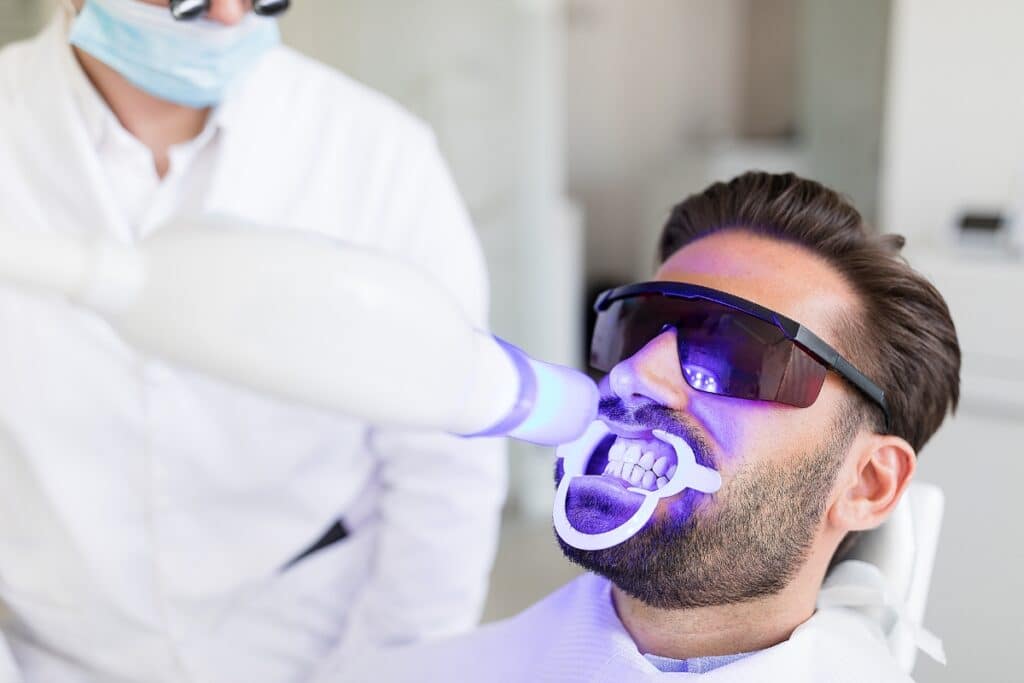
Thinking about professional whitening? It’s usually a good idea if you’re worried about sensitivity. Dentists can monitor progress, use more potent whitening agents in a much safer way, and let you have more control over the treatment than at-home kits do. Excel Dental in Missouri City offers customized whitening treatments, including options for sensitive teeth. With our dentist, you can get brighter results without the worry.
FAQs
- Can teeth whitening make my sensitivity worse?
Teeth whitening can cause temporary sensitivity in some individuals, but with the right products and care, it should not worsen sensitivity. Be sure to consult with your dentist if you’re concerned. - How long does sensitivity last after teeth whitening?
For most people, any sensitivity from teeth whitening is temporary and should subside within a few hours to a day after the treatment. - Can I use teeth whitening products if I have receding gums?
If you have receding gums, your tooth roots may become exposed, increasing sensitivity. It’s best to consult with your dentist before using any whitening products. - Are there natural whitening alternatives for sensitive teeth?
Yes, there are natural options such as baking soda and activated charcoal, though they may not be as effective as professional treatments. Always check with your dentist first before trying these alternatives.